
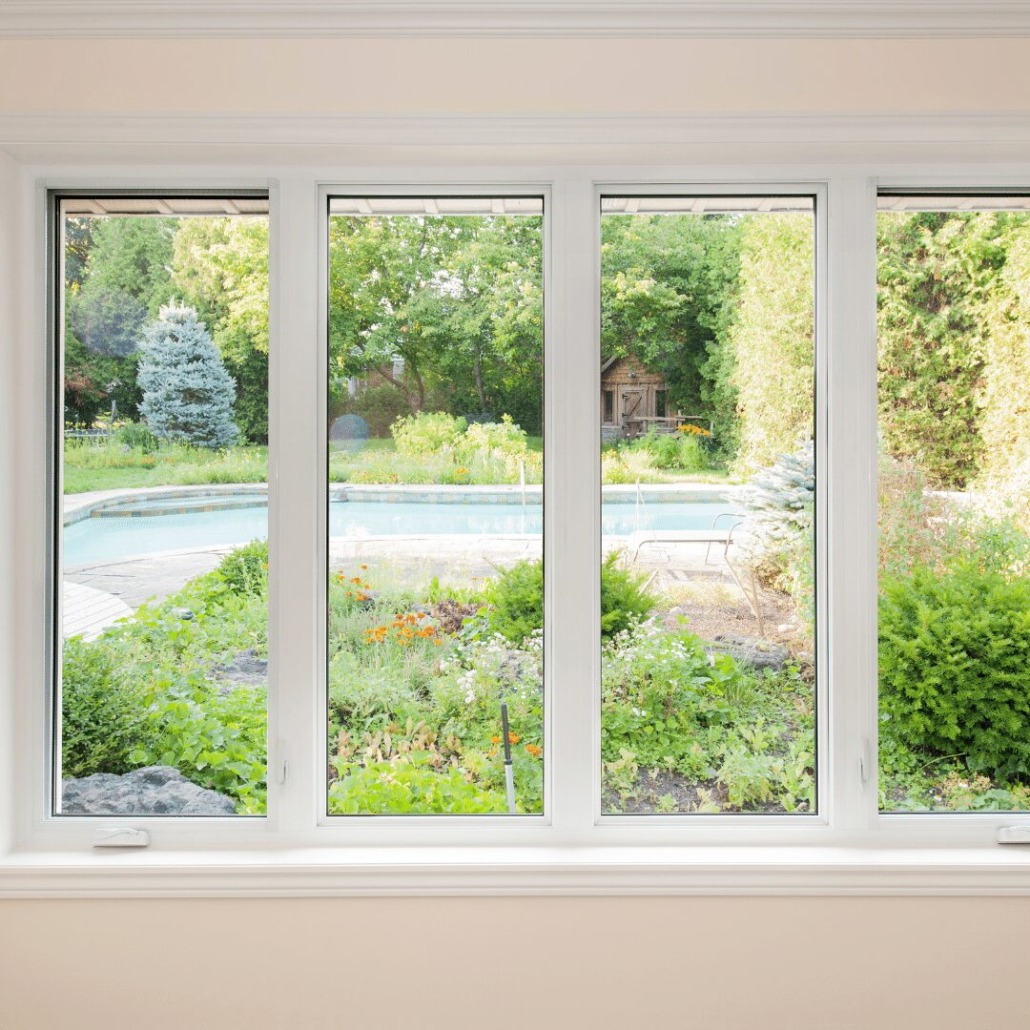
Wood-Clad vs. Vinyl Windows: Why Delaware Homeowners Are Choosing ProVia’s Aeris Line
Anyone who’s shopped for replacement windows has run into the same fork in the road: do you go with real wood for the warmth and character, or vinyl for the low maintenance and price? It’s one of the oldest debates in the window industry — and in a Mid-Atlantic climate like ours, it’s a decision that carries more weight than most homeowners realize.
Delaware doesn’t have a gentle climate. We get humid, sticky summers pulling moisture off the Delaware Bay and the Atlantic, followed by winters that swing between freezing nights and 50-degree thaws. That combination — heat, humidity, and repeated freeze-thaw cycling — is exactly the environment that’s hardest on a traditional wood window, and it’s a big part of why we steer so many New Castle County homeowners toward ProVia’s Aeris line instead of making them choose one material or the other.
Why Traditional Wood Windows Struggle in Our Climate
Wood windows have always had a genuine appeal: warmth, the ability to stain or paint them to match your home’s interior trim, and a traditional look that vinyl has historically struggled to replicate. But wood is also a natural material, and natural materials react to moisture. In a climate where humidity levels climb through the summer and exterior wood trim is exposed to rain, snow, and constant temperature swings, solid wood window frames are prone to swelling, warping, and eventually rotting at the joints and sill — especially on the exterior-facing side of the window, which takes the brunt of the weather.
That’s not a knock on wood as a material. It’s just a mismatch between a moisture-sensitive material and a moisture-heavy climate. Homeowners in older Wilmington neighborhoods with original wood windows know this firsthand — by the time those windows are 30 or 40 years old, most have paint failure, soft spots in the sill, or sashes that no longer seal properly. If you’re seeing any of that on your own windows, our post on signs it’s time to replace your windows walks through what to look for.
Why All-Vinyl Isn’t Always the Right Trade-Off Either
All-vinyl windows solved the moisture problem. Vinyl doesn’t rot, doesn’t need repainting, and holds up well against humidity and freeze-thaw cycling — which is exactly why lines like Endure are such a popular, practical choice across the region.
But something gets lost in the trade: the interior look. For homeowners with existing wood trim, cabinetry, or millwork — common in older homes throughout Wilmington, Hockessin, and Greenville — an all-vinyl window interior can feel out of place next to stained wood door casings and baseboards. It’s a real aesthetic trade-off, not just a preference, and it’s the reason so many homeowners get stuck between “I want it to hold up” and “I want it to match.”
Aeris: Engineered Specifically to Solve This Trade-Off
This is exactly the gap ProVia’s Aeris line was designed to close. Instead of forcing a choice between wood and vinyl, Aeris windows use both — strategically, on the sides of the window that actually need each material’s strengths.
The exterior of an Aeris window is built from a proprietary, European-formulated vinyl compound engineered specifically for durability, moisture resistance, and corrosion resistance — the side of the window that faces our humidity, storms, and temperature swings is the side that’s built to shrug them off. The interior, meanwhile, is genuine oak, cherry, or maple wood, factory-finished and available in a wide range of stain and paint options so it can be matched to existing trim. The two materials aren’t just paired together; they’re integrated through an engineered system that bonds the wood securely to the vinyl frame and sash, so it functions as a single, unified window rather than a wood window with a vinyl add-on.
The result is a window where the exterior does the weather-fighting and the interior does the aesthetic work — which is precisely the split that makes sense in a climate like Delaware’s, where exterior exposure is the real threat to a window’s lifespan, not the interior environment of a climate-controlled home.
What This Means in Practice
- Exterior: Vinyl construction resists the moisture, humidity, and freeze-thaw cycling that cause wood to swell, warp, or rot over time — with no repainting or re-staining required outside.
- Interior: Real wood grain in oak, cherry, or maple, finished with your choice of stain or paint, so it can be matched to existing door and window trim inside your home.
- Energy performance: Aeris windows are independently tested and ENERGY STAR® certified, and use graphite foam insulation within the frame for added thermal performance — worth understanding alongside our breakdown of U-factor and Solar Heat Gain Coefficient if you’re comparing efficiency ratings across brands.
- Construction: The same welded frame-and-sash construction and barrier-fin/bulb-seal weatherstripping used across ProVia’s other lines, so you’re not sacrificing structural quality for the wood-clad interior.
If you want the full technical rundown on how these materials are engineered together, ProVia’s own page on wood-clad vinyl construction goes deeper into the science behind the vinyl compound itself.
Where We See Aeris Make the Most Sense in New Castle County
Not every home needs a wood-clad window — and Aeris does come at a higher price point than an all-vinyl line like Endure or Aspect, which we cover in our full ProVia brand comparison. But there are a few situations where it consistently comes out ahead for the homeowners we work with:
- Historic and period homes in and around Wilmington, Trolley Square, and Greenville, where matching original wood interior trim is a priority for resale value and curb appeal.
- Whole-house renovations where the interior design already leans heavily on natural wood tones — cabinetry, flooring, doors — and a stark white vinyl interior would stand out for the wrong reasons.
- Homeowners who’ve been burned by wood window maintenance before and want the look without repainting, caulking, or re-glazing every few years.
- Higher-end remodels where the window itself is a visible design feature, not just a functional replacement — bay and bow installations, large picture windows, or window walls where the interior finish is highly visible.
If your project is more budget- or rental-driven, or if you’re replacing windows throughout a home where interior wood tone isn’t a major factor, an all-vinyl ProVia line is often the more practical choice — and that’s a conversation worth having before you commit to a material. Our post on return on investment for replacement windows is a good starting point for weighing cost against long-term value either way.
Get Your Buyers Guide for Replacment Windows
Moisture Resistance Matters More Than Most Homeowners Realize
One thing we see often in this region: homeowners assume window “moisture problems” only mean drafts or poor insulation, when in reality, sustained humidity exposure is what shortens the lifespan of a window frame itself — wood especially. If you’re noticing fogging, condensation, or soft spots around your current windows, it’s worth understanding what’s actually happening before you decide on a replacement material. Our guide to window moisture issues breaks down the difference between normal seasonal condensation and a sign that your current windows have already failed.
Talk to a Local ProVia Aeris Dealer
Choosing between wood, vinyl, and wood-clad vinyl isn’t just a style decision in Delaware — it’s a decision about how your windows will hold up against a genuinely tough Mid-Atlantic climate. As a certified ProVia dealer serving New Castle County, American Craftsmen can show you Aeris windows in person, walk through stain and paint options against your home’s existing trim, and help you decide whether Aeris — or one of ProVia’s all-vinyl lines — is the right fit for your project. Contact us to schedule a free consultation.



Leave a Reply
Want to join the discussion?Feel free to contribute!