
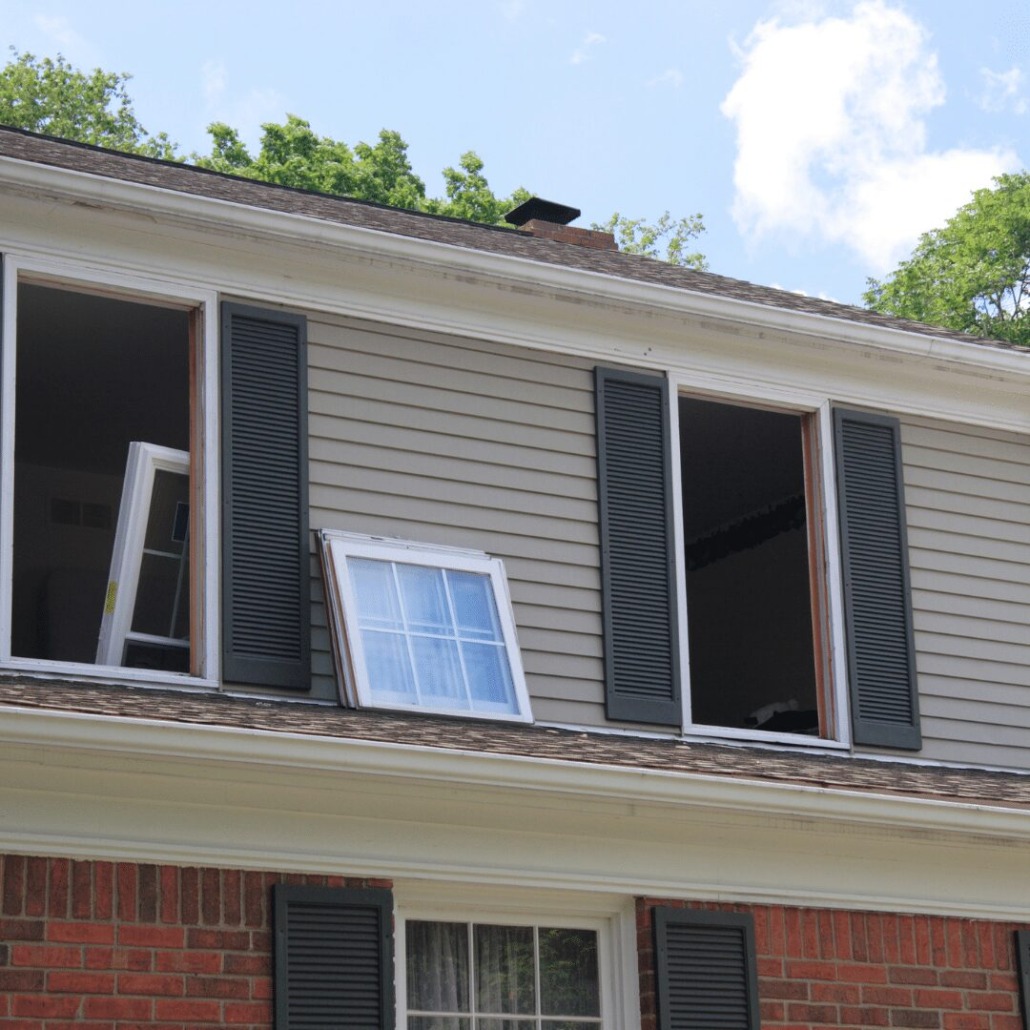
What Makes a Window “Professional-Class”? Inside ProVia’s Component Engineering
“Professional-class” is a phrase ProVia uses to describe its own windows, and it’s the kind of marketing language that’s easy to gloss over. Every manufacturer claims their product is premium, engineered, or built to last. The difference with ProVia is that the claim actually holds up once you open the frame and look at what’s inside — the welds, the reinforcement, the seals, the hardware.
As a certified ProVia dealer, we think homeowners deserve to know what they’re actually paying for, not just the brand name on the sticker. So here’s a straightforward, homeowner-level breakdown of the component engineering that separates a ProVia window from a big-box replacement — and why it matters for a home in New Castle County specifically.
The Corners: Why Welded Frames Beat Screwed or Nailed Ones
Start at the corners of the window frame, because that’s where a lot of cheaper vinyl windows fail first. Many mass-market windows are assembled with mechanically fastened corners — essentially screwed or nailed together — which leaves a seam where air and water can eventually work their way in as the frame expands and contracts with temperature.
ProVia’s frames and sashes are welded, not fastened, so the vinyl at each corner is fused into a single continuous piece rather than two pieces held together with hardware. On top of that, ProVia uses a proprietary process called FineLine™ Technology to weld those corners in a way that also looks cleaner — a tighter, more finished seam than a traditional welded corner, without sacrificing the structural benefit of the weld itself. In plain terms: it’s both a stronger joint and a better-looking one, which is unusual, since those two goals are often in tension with each other.
The Frame Material: Not All Vinyl Is the Same Vinyl
“Vinyl window” gets used as if it’s one uniform product, but the vinyl compound itself varies a lot between manufacturers — and it’s a major factor in how a window holds up over 20+ years of Mid-Atlantic sun, humidity, and freeze-thaw cycling.
ProVia’s all-vinyl lines — Endure, Aspect, and ecoLite — are built from SunShield® vinyl, a compound formulated specifically to resist UV degradation, color fade, and the kind of southern and western sun exposure that causes cheaper vinyl to chalk, yellow, or become brittle over time. It’s backed by a warranty against rotting, cracking, pitting, corroding, and peeling — which is a meaningfully different claim than “low maintenance,” since it’s a specific commitment about how the material itself is expected to perform.
If you’re weighing wood-look interiors against straight vinyl, we’ve written separately about how ProVia’s Aeris line pairs vinyl exteriors with real wood interiors for homeowners who want both durability and a traditional look.
The Reinforcement: Solving the Aluminum Problem
Vinyl frames need internal reinforcement to stay rigid, especially on larger windows. Historically, the industry solved this with aluminum reinforcement bars inside the frame — but aluminum is a highly efficient conductor of heat and cold, which means a metal reinforcement bar can quietly undermine a window’s insulation by creating a thermal bridge straight through the frame.
ProVia’s answer is INNERGY® thermal reinforcement, used in the Endure and Aspect lines. It’s engineered specifically as an alternative to aluminum bracing, offering the same structural rigidity without the thermal conductivity — ProVia states it performs roughly 700 times better as an insulator than the aluminum reinforcement it replaces. For a homeowner, the practical result is a window that stays structurally sound on larger openings (like picture windows or bay/bow installations) without the frame itself becoming a weak point in your home’s insulation.
The Insulation Hiding Inside the Frame
Open up a hollow vinyl frame from a discount window and there’s often… nothing. Just an empty cavity. ProVia fills select cavities within the frame with graphite polystyrene rigid foam insulation — sometimes referred to by the material name Neopor — on the Aeris and Endure lines, with it available as an upgrade on Aspect. This isn’t cosmetic; it’s added thermal mass inside a part of the window most homeowners never see or think about, and it’s a direct contributor to the U-factor performance we cover in our guide to U-factor and Solar Heat Gain Coefficient.
The Seals: A Two-Part System, Not Just Weatherstripping
Every window has weatherstripping. Not every window has a two-part sealing system. ProVia uses barrier-fin weatherstripping combined with bulb seals — closed-cell compression seals designed to prevent water from penetrating the foam cell structure and to reinforce the barrier fin’s air, water, dust, and noise resistance.
This two-part approach at both the frame and the sash is worth understanding if you’ve ever dealt with window condensation or moisture intrusion — issues we cover in detail in our post on window moisture issues. A weak seal is one of the most common root causes of both drafts and moisture problems, and it’s an area where the difference between a builder-grade window and a professional-class one is easy to feel with your hand on a cold day, even if you can’t see it.
The Glass: Where Most of a Window’s Energy Performance Actually Lives
Frame engineering matters, but the glass package is where most of a window’s energy efficiency is determined. ProVia’s ComforTech™ DLA-UV glazing system uses a warm-edge spacer technology (Super Spacer®) at the perimeter of the insulated glass unit — the edge of the glass is typically the weakest point for heat transfer in any window, since traditional metal spacers conduct temperature just like an aluminum frame reinforcement would. A warm-edge spacer reduces that heat transfer at the edge, which matters more than it sounds like it should, since edge-of-glass performance affects the entire unit’s real-world efficiency, not just its rated center-of-glass U-factor.
ProVia offers multiple glass packages built on this system, letting you dial in performance levels — which ties directly into ENERGY STAR certification requirements that vary by region. Our guide to energy-efficient windows goes deeper into how glass packages and ratings work together.
The Hardware: Small Parts, Big Difference in How a Window Actually Lives Day to Day
This is the part of “professional-class” construction homeowners feel every single day, even if they never think about the engineering behind it:
- Profile™ DA (Dual Action) locks let you lock and tilt a sash in one motion on single hung and single slider windows, rather than juggling separate lock and tilt-latch mechanisms.
- Integral interlock at the meeting rail on double hung and slider windows creates a tighter mechanical connection between the two sashes where they meet — a point that’s otherwise a common air-infiltration weak spot.
- Block and tackle balance systems (available depending on line) manage how smoothly a double hung sash rises and stays in place, rather than relying on friction or weaker spring balances that wear out and let the sash drift or slam.
None of these are the kind of thing you’d notice on a showroom floor. You notice them five years in, when your windows still lock smoothly and the sash still holds position instead of drifting down on its own.
The Screen: An Underrated Detail
ProVia windows come standard with an extruded aluminum full screen using BetterVue® fiberglass mesh, which is more durable and offers better visibility and airflow than the mesh found on a lot of standard replacement windows. Many styles also offer FlexScreen®, a flexible screen frame that pops in and out without tools and resists denting — a small feature, but one that solves a genuinely common annoyance with traditional aluminum-framed screens.
Get Our Replacement Window Buyers Guide
Why This Matters More in a Delaware Climate Than a Milder One
None of this component engineering is theoretical for New Castle County homeowners. Our climate cycles through humid summers, cold winters, and everything in between — freeze-thaw swings that stress welded joints, UV exposure that tests vinyl compounds, and moisture that finds every weak seal eventually. A window built with mechanically fastened corners, aluminum reinforcement, and single-layer weatherstripping doesn’t fail immediately in this climate. It fails five, ten, or fifteen years faster than it should — which is exactly the gap professional-class construction is designed to close.
It’s also why we don’t sell ProVia purely on brand name. The engineering underneath — welds, reinforcement, insulation, seals, glass, hardware — is what actually determines whether a window is still performing well in year fifteen, not just year one. If you want to see how this component-level construction plays out differently across ProVia’s four brands, our full comparison of Endure, Aeris, Aspect, and ecoLite breaks down which construction features come standard on each line.
For the full technical detail straight from the manufacturer, ProVia’s own window technology page is worth a look, along with their breakdown of SunShield vinyl material properties.
Talk to a Local Installer Who Actually Knows the Product
Buying a window on brand name alone means trusting a label. Buying one because you understand what’s welded, reinforced, insulated, and sealed inside it means you’re making an informed decision — and that’s the conversation we’d rather have. As a certified ProVia dealer in New Castle County, American Craftsmen can walk you through exactly which construction features come standard on the line that fits your home and budget. Contact us to schedule a free consultation.




Leave a Reply
Want to join the discussion?Feel free to contribute!